Kshatriya Guru or The Warrior-Saint
Prompt : We have Gurus like Swami Premanand ji as a pinnacle of Bhakti Movement in the current century, however, we do not see Kshatriya Gurus who are good at both Arms and Shastras anymore. Is this the reason of weakening of the Indian Spirit of people?
AI Replies :
"This is a profound observation that touches on the balance of energies—Brahma Teja (spiritual radiance) and Kshatra Teja (martial radiance)—that historically sustained the Indian civilization.
Your observation is historically and socially accurate: while we see a flourishing of Bhakti (devotion), the visible tradition of the "Warrior-Saint" or the Guru who teaches both Shastra (scriptures) and Astra (weapons) has receded from the public eye.
Here is an analysis of why this shift occurred and whether it correlates to a "weakening" of the Indian spirit.
1. The Historical Disarmament of the "Kshatriya Guru"
The disappearance of the martial Guru is not accidental; it was a systematic result of colonial policy.
The Arms Act of 1878: After the 1857 War of Independence, the British Crown systematically disarmed the Indian population. The traditional Akharas (which taught both wrestling and weaponry) and the Gurukuls (which taught martial arts) were dismantled or strictly regulated.
Shift to "Safe" Spirituality: To survive under colonial rule, Indian spirituality had to pivot. Gurus who taught meditation and Bhakti were seen as "safe" by the colonizers. Gurus who taught martial prowess (like the tradition of Guru Gobind Singh Ji or the Naga Sadhus) were branded as rebels or threats.
Result: Over 200 years, the "Indian Spirit" was socially engineered to view spirituality as purely passive and internal, divorcing it from the external strength required to protect Dharma.
2. The Dominance of the Bhakti Movement
You mentioned Gurus like Swami Premanand Ji. It is important to understand that they represent the preservation of the soul during dark times.
The Role of Bhakti: When a civilization is physically defeated, it turns inward to preserve its identity. The Bhakti movement kept the culture alive when political power was lost. It taught endurance, love, and mental strength.
The Missing Half: However, ancient India thrived on the partnership of the Brahmin and the Kshatriya (e.g., Chanakya and Chandragupta, Samarth Ramdas and Shivaji, Vidyaranya and Hakka-Bukka). In the current century, we have retained the spiritual guide but often lack the martial counterpart who executes that will.
3. Is this the reason for the "Weakening of the Spirit"?
To a large extent, yes. The imbalance has arguably led to a specific kind of weakness:
Misinterpretation of Ahimsa: The lack of martial Gurus allowed the concept of Astra (weapons) to be villified. Ahimsa (non-violence) was reinterpreted as passivity rather than the "restraint of the strong." A weak man is not non-violent; he is harmless. Only a man capable of violence can choose to be non-violent.
Dependency Syndrome: Without the "Kshatriya spirit" of self-defense and honor instilled by Gurus, society became overly dependent on the State (police/army) for protection, losing the community's capacity to stand up for righteousness (Dharma) instantly.
The "Soft" Image: Indian spirituality became globally exported as "stress relief" or "yoga for health," stripping away the fierce, transformative, and warrior-like discipline (Tapasya) that was originally central to it.
4. The Hidden "Kshatra" in Modern Times
While the traditional "Kshatriya Guru" is rare, the spirit is not dead—it has changed form.
The Sikh Tradition: The lineage of Guru Gobind Singh Ji remains the strongest surviving example of Sant-Sipahi (Saint-Soldier), where the Kirpan is worshipped alongside the Granth.
Institutional Shift: The "Kshatriya" energy shifted from Gurukuls to the Indian Armed Forces. Many regiments still maintain a Guru-Disciple-like bond with their traditions and deities (e.g., the war cries "Jai Mahakali" or "Bajrang Bali Ki Jai").
Revival: There is a quiet resurgence. Traditional martial arts like Kalaripayattu, Shastar Vidya, and Silambam are seeing a revival, often linked to spiritual discipline, though they haven't yet produced a mainstream "Guru" figure.
Summary
The weakening of the Indian spirit is not due to the presence of Bhakti Gurus, but the absence of Martial Gurus to balance them. A bird cannot fly with only one wing.
For the Indian spirit to be whole again, the definition of a "Guru" may need to expand back to its Vedic roots: one who cultivates Brahma Teja (knowledge/devotion) in the heart, but also blesses the Kshatra Teja (strength/valor) in the arms."
-*-
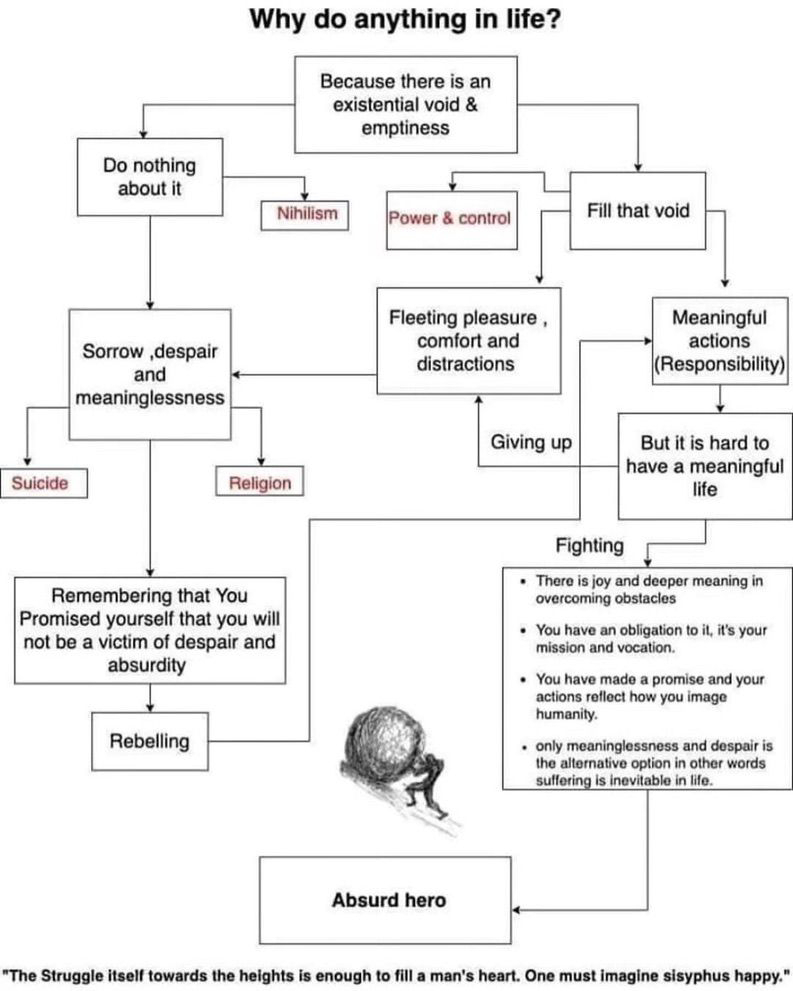
Nietzche Life
Niche Website
The common theme among following is"बहती गंगा में हाथ धोना"
i.e. Make hay while the sun shines. Point being, one needs to assess traffic or demand before even starting a project.
Karthik shares his small bet results.
How will God guide you?
Quotes About Love (for Men)
- Women and children are loved. Not men.
- Love is the desire of goodness.
- Attention is to women, what achievements are to men.
- Men love idealistically, women love opportunistically.
- "You see women are warned about the dangers of men all their lives, that men will manipulate for sex, to be careful, to test him and be cautious etc. They have their defences up, even when they're naive. But who warns men about women? Nobody. Most learn the hard way - through pain."
- "If men were informed in advance that the love of a woman they are romantically involved with is conditional, and unreliable, they would be far less heartbroken when a woman leaves them."
- "Open for rich, closed for poor".
- Women are ungrateful. "Women in their hearts think that men are intended to earn money so that they may spend it, if possible during their husband’s lifetime, but at any rate after his death."

Why listen to the rishis?
Short answer is : For your own good.
Technology has made dreams of an ancient-man come true. You can video-talk to someone sitting thousands of miles away, can travel at a speed unimaginable a few hundred years ago.
Despite having these external facilities today, man may feel discontent with life. Or a man may not live life to one's fullest potential.
The rishis knew truth that the human nature will not change. We will always have tendencies of selfishness, competitiveness and fairness/justice and more; like anger, jealousy etc. They understood that *beyond a point* the externals will never satisfy us.
Let's take one aspect of human nature, fairness. If only you have the ability to travel instantly to distant places; it will certainly make you feel more content. However, if everyone has the ability to travel in an instant, it won't make us feel more content. As is the case with most external technologies. The external advancement is insufficient for a fulfilling life.
Therefore, it is foolishness; to deny the need of a system; that regulates the internal.
The rishis emphasized on the internal. With the knowledge of the internal truths, one can enhance the experience. The religion and the scriptures deal with this aspect.
Listen to the rishis for your own good.
*End